Concrete Scanning
Non-destructive scanning of concrete elements to detect reinforcement, post-tension cables, and embedded services.
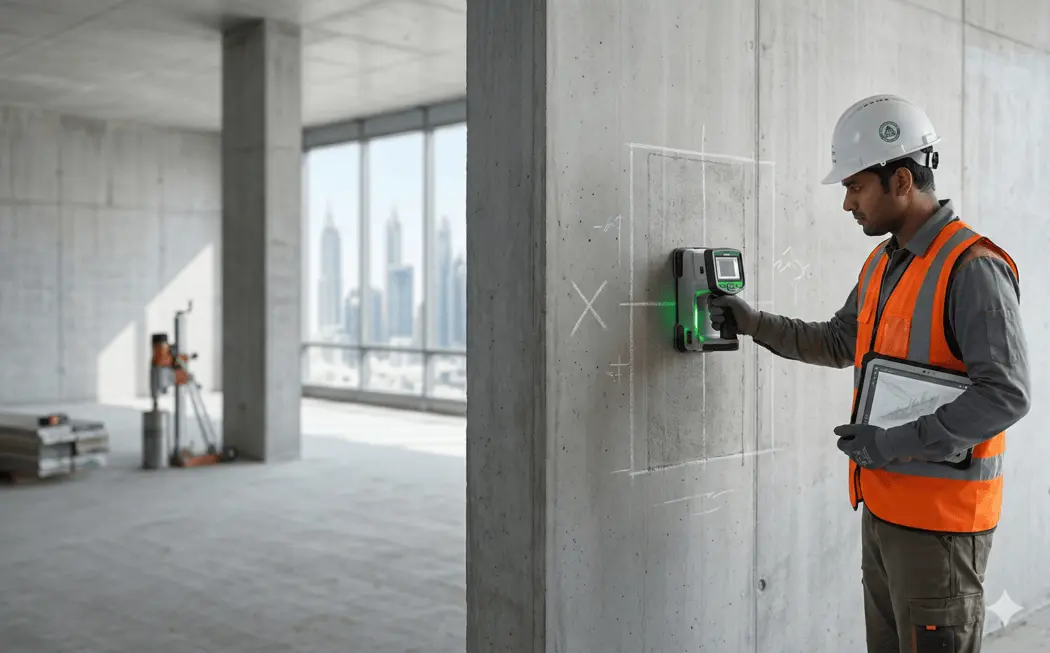
Reinforcement and Embedded Service Detection
Concrete scanning uses Ground Penetrating Radar (GPR) to locate rebar, post-tension tendons, conduits, and embedded elements within slabs, walls, and structural components. This process supports safe drilling, coring, cutting, and structural modifications by identifying hidden structural features before intervention.
Our Methodology
Delivering excellence through a proven three-stage workflow
Surface Grid Marking & Scanning
The concrete surface is divided into scan grids and surveyed using calibrated GPR equipment.
Reinforcement & Service Detection
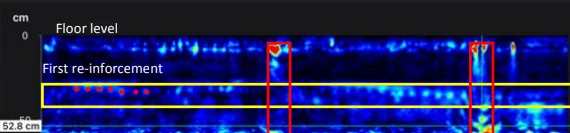
Rebar spacing, depth, cable positions, and embedded utilities are identified and analyzed.
Marking & Documentation
Detected elements are marked on-site and documented in layout drawings or scan reports.
Applications
Industry sectors and use cases we serve
Core Drilling & Cutting Works
Prevents damage to reinforcement and post-tension systems
Renovation & Structural Modifications
Identifies hidden elements prior to structural changes
MEP Installations
Locates conduits and embedded services before routing new systems
Structural Safety Assessment
Confirms reinforcement patterns and slab thickness
Deliverables
What you receive at the end of every project
- Reinforcement layout drawings
- Post-tension cable identification maps
- Slab thickness assessment
- Marked scan grid documentation
- Condition summary report
Technology Stack
Industry-leading equipment and software
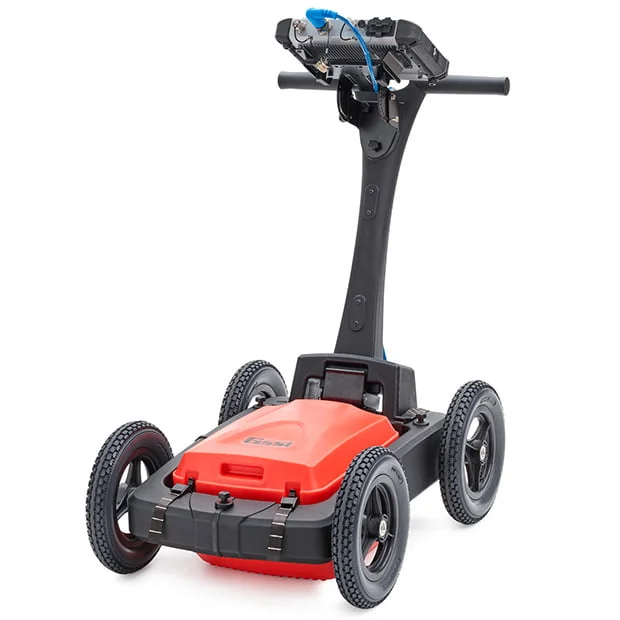
GSSI GPR System
Advanced surveying technology for precision data capture and analysis.
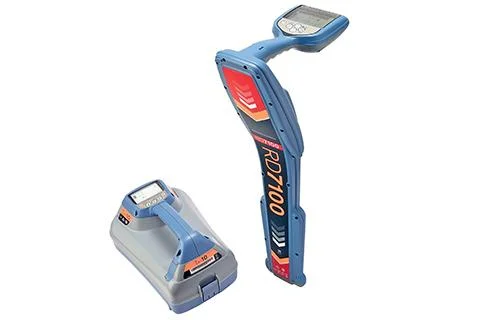
Hilti PS 300 Ferroscan
Advanced surveying technology for precision data capture and analysis.
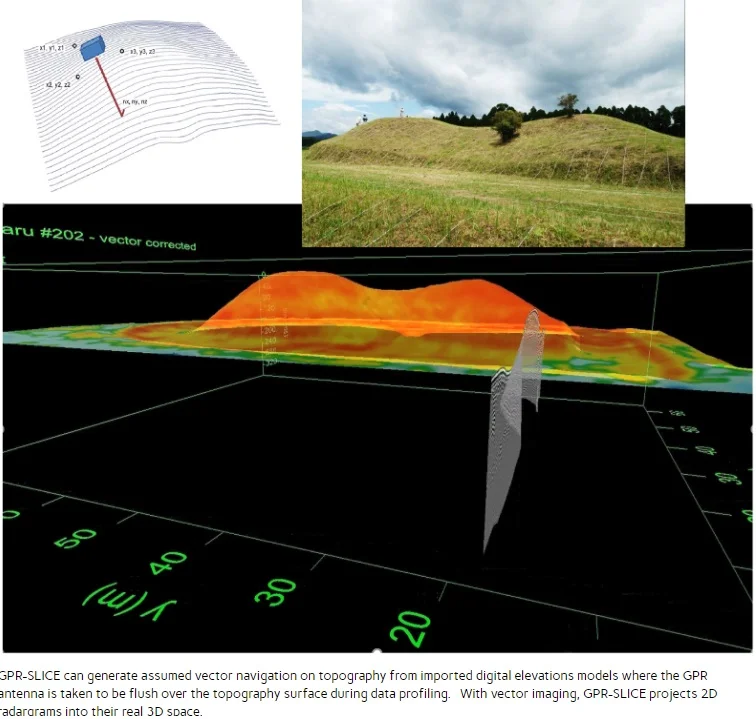
GPR Slice Software
Advanced surveying technology for precision data capture and analysis.
AutoCAD
Advanced surveying technology for precision data capture and analysis.
Proceq Profometer
Advanced surveying technology for precision data capture and analysis.
Frequently Asked Questions
Our GPR equipment can detect objects up to 450mm deep in concrete, covering most structural elements and embedded utilities.
Yes, post-tension cables are clearly identifiable with our high-frequency GPR antennas. We map their routing and depth accurately.
Most areas can be scanned and marked in real-time. A typical floor slab takes 2-4 hours depending on size and complexity.
Yes, GPR is completely non-destructive and safe. No radiation is involved — it uses electromagnetic waves similar to Wi-Fi.
Have more questions?
Our team of experts is ready to assist you with your specific project requirements across the GCC.
Related Services
Explore our other professional surveying solutions
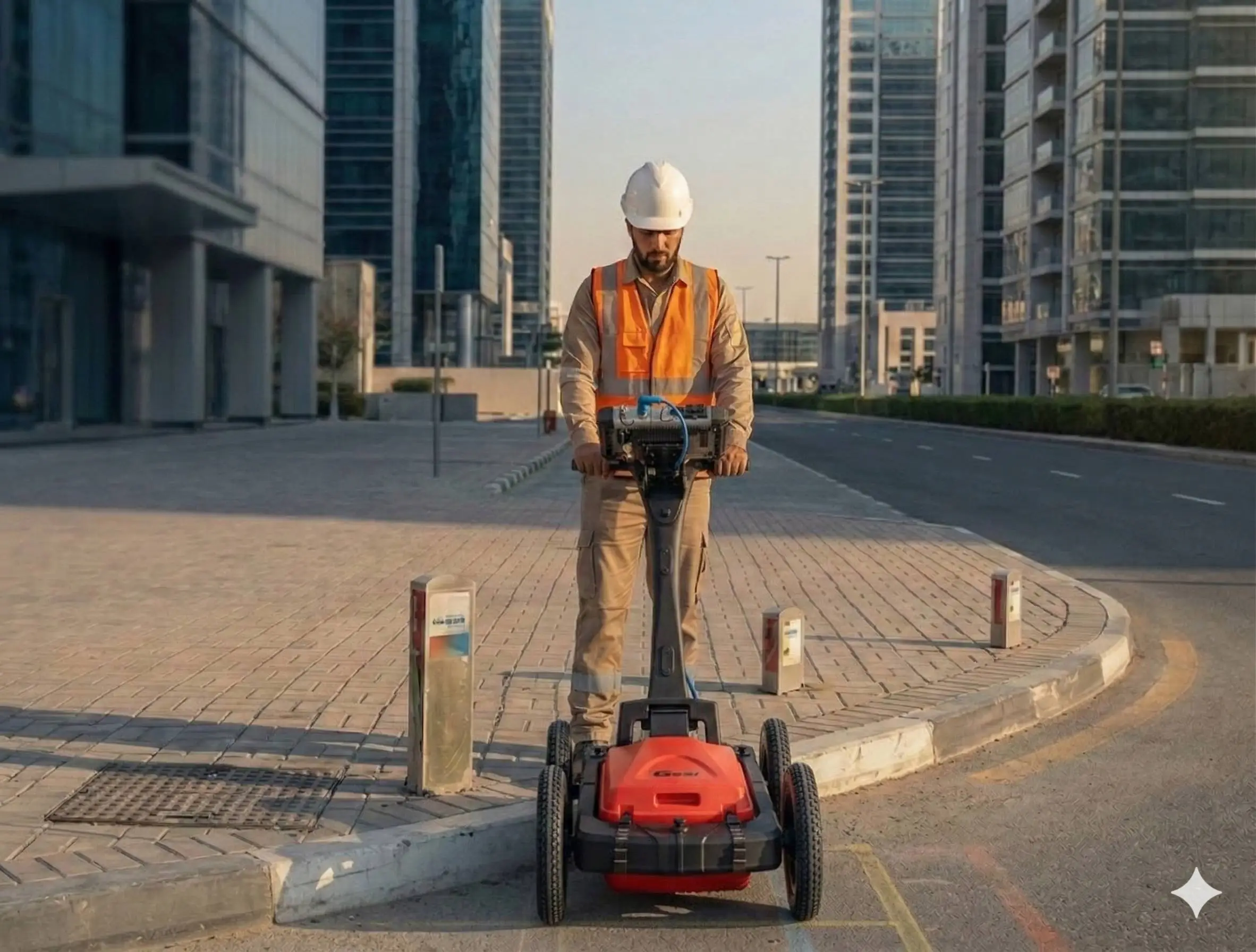
Underground Utility Surveys
Detection, mapping, and verification of buried utility networks using GPR and electromagnetic locating systems.
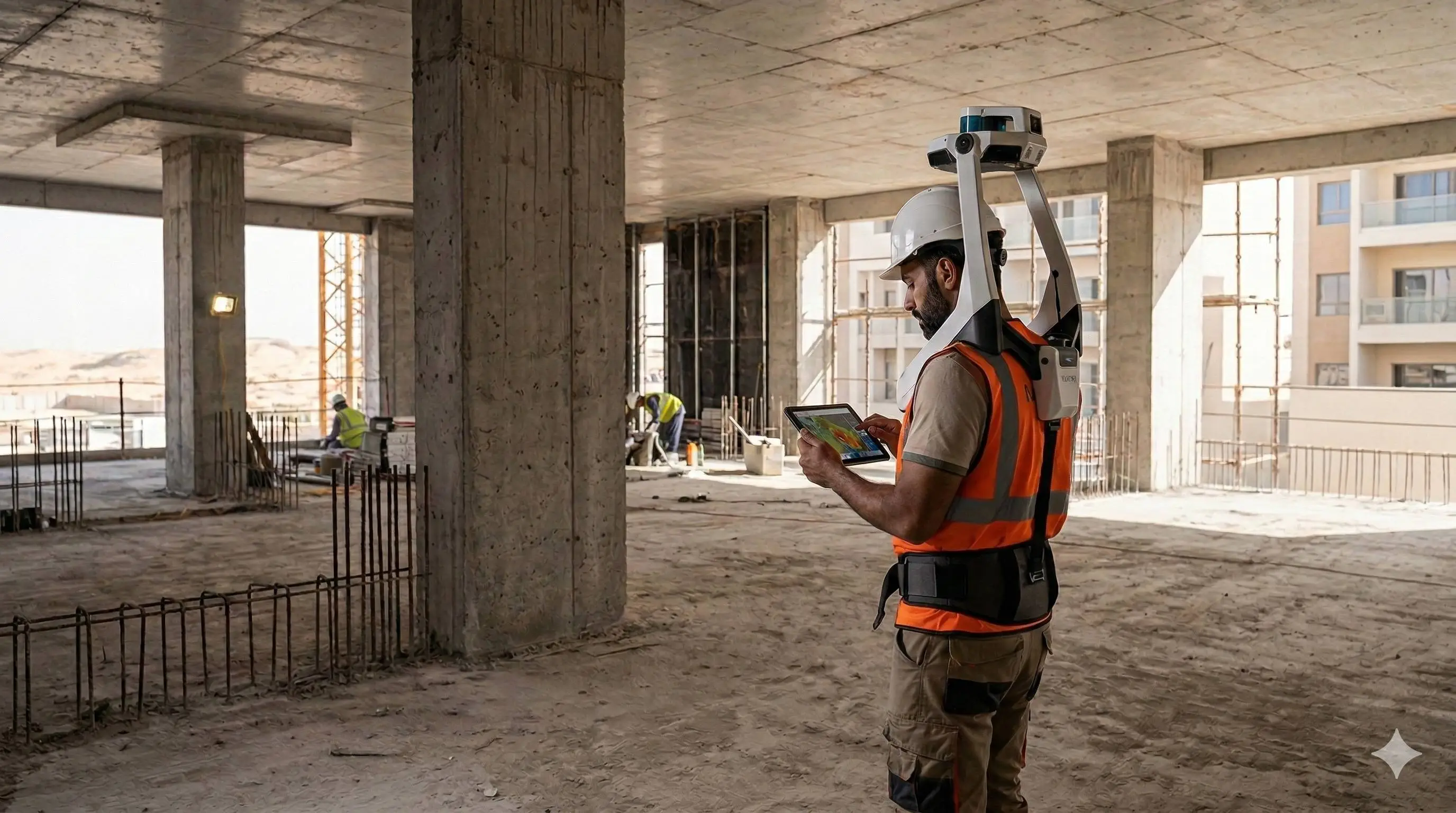
As-Built Surveys (3D Laser Scanning-Based)
High-accuracy 3D laser scanning for documentation and verification of existing building structures, including slab levels, core walls, and structural geometry.
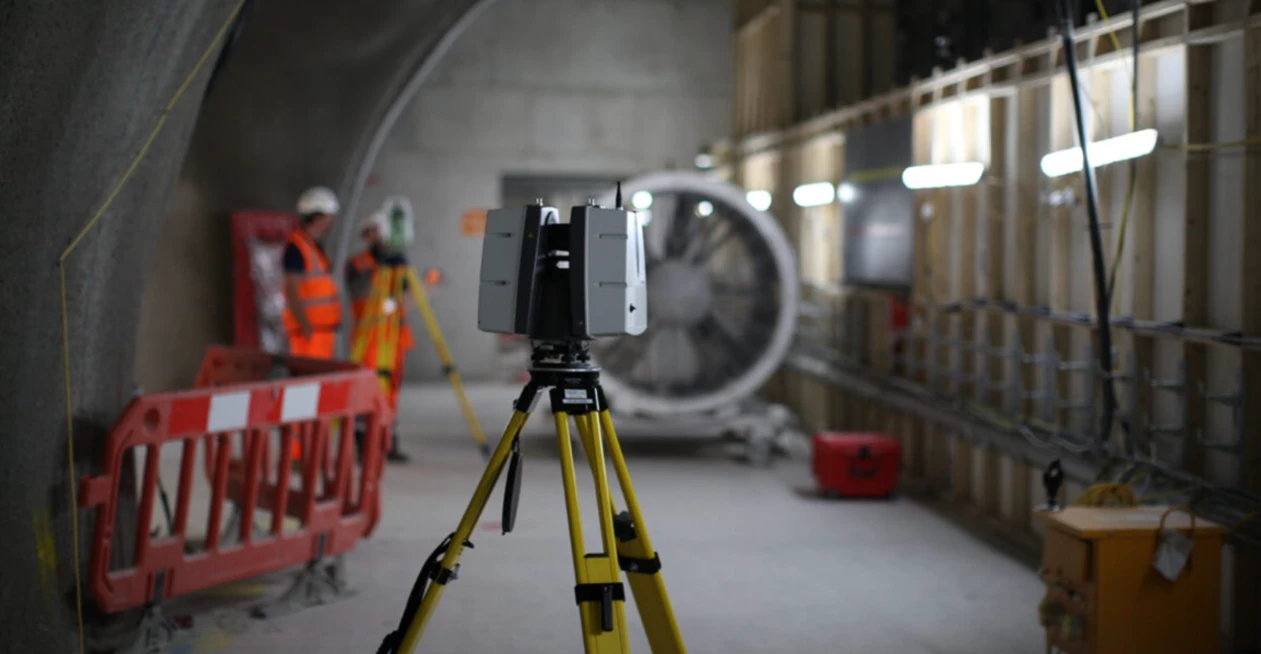
3D Laser Scanning
High-precision terrestrial laser scanning for detailed 3D capture of buildings, structures, and industrial environments.
Contact us directly
Reach our team instantly via WhatsApp, phone, or email.
Also available in Riyadh